
Is It Safe to Use a Fireplace Without a Chimney Sweep?
In Gaithersburg, a chimney sweep starts at $89; it is safe to use a fireplace without a chimney sweep only after an inspection confirms the flue is clear and any needed cleaning is complete. We offer same-day service and are open 24/7.
Need help now? (240) 734-3313
Is It Safe to Use a Fireplace Without a Chimney Sweep in Gaithersburg?
A fireplace does not automatically need sweeping every year, but its chimney should be inspected annually. Use it only when the inspection finds the flue in suitable condition and no buildup or damage calls for cleaning or repair. A sweep removes deposits; an inspection checks the chimney’s condition.
The National Fire Protection Association’s annual inspection guidance is summarized in CSIA’s homeowner resources. The inspection helps identify whether your chimney needs sweeping before the next fire, rather than relying on how clean the firebox looks.
Choose the Right Next Step Before Using Your Fireplace
No recent inspection
Schedule a chimney inspection before lighting a fire. The firebox can look tidy while deposits or damage remain farther up the flue.
Inspection shows soot or creosote buildup
Arrange a chimney sweep to remove the deposits. CSIA identifies creosote buildup of 1/8 inch or more as a reason to sweep.
Smoke, damage, or a suspected chimney fire
Stop using the fireplace and arrange an inspection before lighting it again. A sweep removes deposits; damage may require a separate repair.
Signs Your Chimney May Need Cleaning
A visible sign can tell you to pause use, but it cannot establish the condition of the entire flue. Do not climb onto the roof or reach into a chimney to investigate.
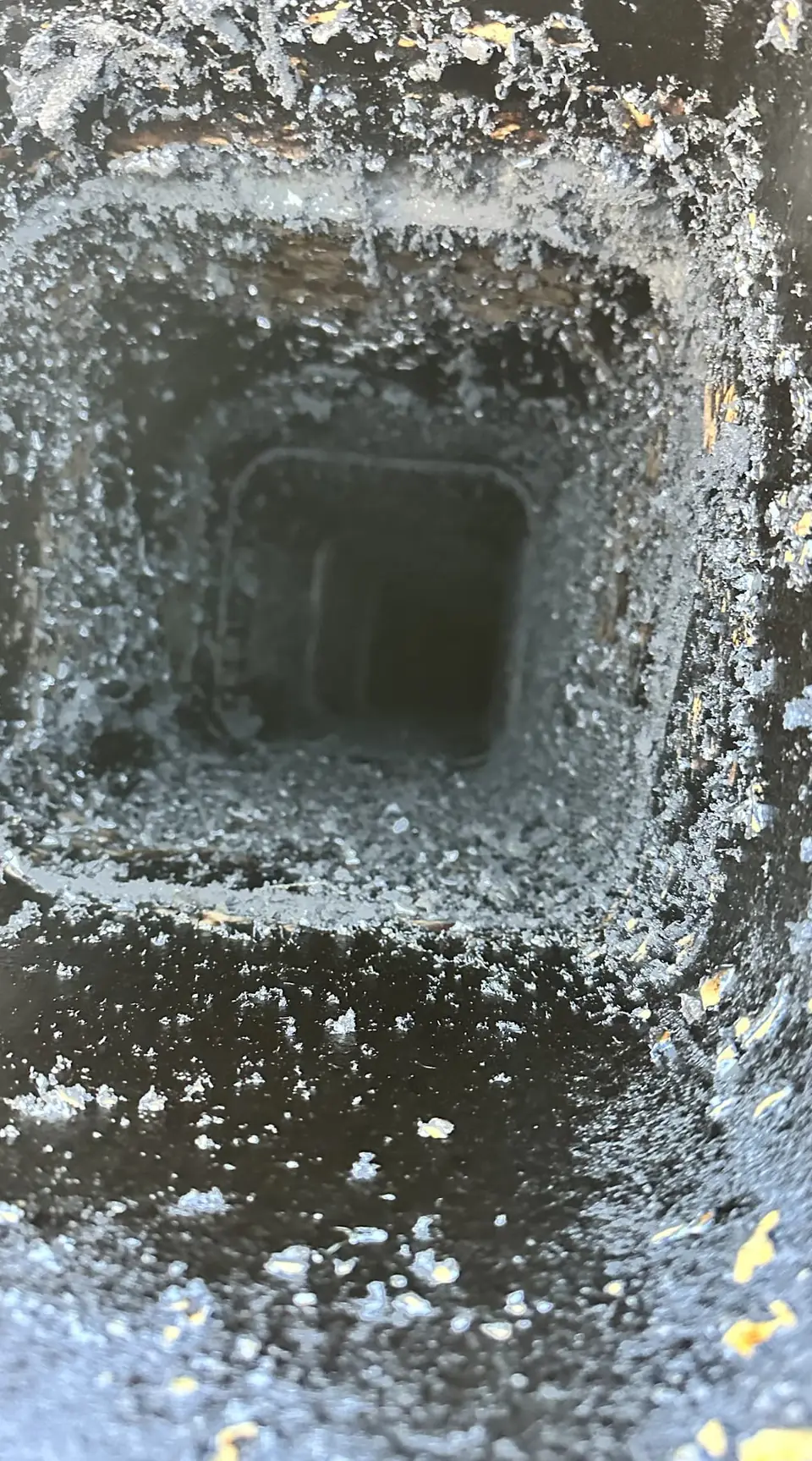
- Dark, crusty deposits — Soot or creosote visible inside the firebox or at the flue opening is a reason to schedule an inspection and cleaning as needed.
- Smoke entering the room — Smoke that spills into the living space can point to a draft or venting problem. Stop using the fireplace until the cause is checked.
- A strong smoky odor when the fireplace is cold — Odor can accompany deposits in the chimney. It does not show how much buildup is present, so have the flue assessed.
- Debris or loose material in the firebox — Material falling from above may signal a problem inside the chimney. Keep the fireplace out of use until it is inspected.
- A past chimney-fire warning sign — After an unusual roaring sound, extreme heat, or visible damage, do not relight the fireplace. Arrange an inspection to check for hidden damage.
Need help now? (240) 734-3313
Eight Checks to Make Before Lighting a Wood-Burning Fireplace
Make these checks only when the fireplace and ashes are completely cold. They are a basic visual review, not a substitute for a chimney inspection.
- Check the last inspection date — Look for a service record or note showing when the chimney was last inspected. If you cannot confirm an annual inspection, arrange one before use.
- Look over the firebox — Use a flashlight to check the firebox walls and floor for loose brick, broken material, or heavy deposits. Stop if you see damage or debris that may have fallen from above.
- Check the damper — Use the damper handle to confirm it moves and opens before a fire is started. If it is stuck or will not stay open, do not burn a fire.
- Look upward from the fireplace opening — From the floor, shine a flashlight toward the visible flue area. Do not put your head or hands into the flue; stop if you see substantial deposits, blockage, or damage.
- Check for debris — Look for nesting material, leaves, or other objects visible from the fireplace opening. A visible obstruction means the chimney needs professional attention before use.
- Check for smoke or odor history — Recall whether smoke spilled into the room or a strong smoky smell lingered after the last fire. Either sign is a reason to have the venting system checked.
- Look for visible signs of a past chimney fire — Do not relight the fireplace after a loud, unusually intense fire or suspected chimney fire. Arrange an inspection because heat can damage chimney materials out of sight.
- Decide whether to use it or pause — Use the fireplace only when the chimney has been inspected and any needed cleaning or repair is complete. If a check raises concern, book a chimney inspection before burning wood.
Dirty Chimney Dangers Go Beyond Visible Soot
Creosote is a combustible deposit that can ignite inside a chimney. A chimney fire can damage masonry or a factory-built chimney, including parts that are not visible from the fireplace opening. That is why a small amount of soot in the firebox is not enough to judge whether the full flue is safe.
Smoke entering the room is another reason to stop using the fireplace. Do not try to solve a persistent smoke problem by burning a hotter fire; have the chimney and its venting checked first. CSIA explains how creosote buildup and chimney fires can affect chimney systems in its chimney-fire prevention guide.
What a Chimney Sweep Addresses Before Your Next Fire
A chimney sweep removes soot and creosote deposits from the chimney. Sweeping is the right next step when an inspection finds buildup that needs removal; it is not a substitute for checking the chimney’s condition or repairing damaged parts.
MD Chimney Sweep provides chimney sweeping in Gaithersburg and across Maryland. For the service details, visit our chimney sweep page. Darren Whitaker, the owner, has 22 years of experience with chimneys and fireplaces.
Need help now? (240) 734-3313
Annual Inspection and Chimney Sweeping Are Different Tasks
An annual inspection checks the chimney for condition and potential problems; sweeping removes deposits when cleaning is needed. The annual check does not mean every chimney must be swept every year. The amount and condition of buildup, along with any damage or blockage, guide the next step.
This distinction matters when you have not used the fireplace much or the firebox looks clean. Neither fact establishes that the flue is clear. If an inspection finds creosote at or above the 1/8-inch threshold described by CSIA, cleaning is needed before use.
Book a Chimney Sweep When the Flue Needs Cleaning
Once you know cleaning is needed, arrange the service before lighting another fire. We offer same-day service and are open 24 hours a day, 7 days a week. Call (240) 734-3313 or use our contact page to book service at your home.
The chimney sweep starting price is $89. If you are unsure whether the issue is deposits or damage, a chimney inspection can identify what the chimney needs before you use it again.
Frequently asked questions
How do I know my chimney needs cleaning?
Visible soot or creosote, smoke spilling into the room, debris, or a strong smoky odor are reasons to stop using the fireplace and arrange an inspection. A visual check cannot show the full condition of the flue, so have it assessed before deciding whether sweeping is needed.
What happens if you never clean your chimney?
Soot and creosote can build up in the flue, and creosote can catch fire. Deposits may also narrow the passage for smoke, while a chimney fire can damage chimney materials; an inspection identifies whether cleaning or repair is needed.
Does a chimney need to be swept every year?
A chimney should be inspected annually, but sweeping depends on the condition and amount of deposits. If the inspection finds buildup that needs removal, schedule cleaning before using the fireplace.
Can I check my chimney myself before using the fireplace?
You can look at the cold firebox, check that the damper moves, and use a flashlight to view the flue from the fireplace opening. Do not climb onto the roof or reach into the flue; these checks cannot replace a full inspection.
Get the Chimney Checked Before the Next Fire
Call (240) 734-3313 or contact MD Chimney Sweep to book service at your home.