
What Does a Chimney Sweep Do During a Visit?
In Gaithersburg, a chimney sweep visit checks the firebox, damper, flue and chimney, then removes soot and creosote buildup as needed; service starts at $89. Same-day service is available, and we’re open 24 hours a day, 7 days a week.
Need help now? (240) 734-3313
What a Chimney Sweep Checks Before Brushing
A sweep starts by looking over the fireplace and the parts that carry smoke out of your home. That includes the firebox, damper, visible flue surfaces and chimney opening. These checks help identify soot, creosote, obstructions or visible damage before cleaning begins.
The sweep may also ask how the fireplace has been working. Smoke entering the room, difficulty starting a fire or a strong smoky odor can point to a problem that brushing alone will not solve. Tell the sweep what you noticed and when it happens, such as during startup or after the fire dies down.
A chimney sweep in Gaithersburg is the right service when you need the fireplace and flue cleaned. A chimney inspection is a separate evaluation of the system’s condition; the sweep can identify when a closer inspection is needed.
Does Your Fireplace Need a Sweep or an Inspection?
Cleaning and inspection answer different questions. A sweep removes deposits; an inspection looks for defects and checks whether the chimney can safely vent the fireplace. One visit may involve both, but cleaning does not replace a thorough inspection.
Choose sweeping for soot and creosote
Book a sweep when deposits are building up in a wood-burning fireplace or flue. The sweep uses brushes and collection equipment to loosen and remove buildup that could restrict the passage of smoke.
Choose inspection for condition concerns
Request an inspection after a change to the fireplace or chimney, or when you see damage, smoke problems or signs of a blockage. A video inspection can help assess areas that are not visible from the firebox.
Ask about both when the system has changed
A new appliance, relining project, chimney fire or significant weather event can call for a more detailed evaluation. CSIA’s Level 2 inspection procedure describes situations that warrant this inspection and the use of a video scan.
How a Chimney Sweep Cleans the Flue, Step by Step
A typical chimney sweep visit follows a controlled sequence so the technician can check the system, contain debris and clean the areas the tools can reach. The precise method depends on the fireplace and chimney design.
- Review the fireplace and visible condition — The sweep looks at the firebox, damper and accessible flue opening, and asks about smoke or draft symptoms. The check helps flag an obstruction or visible damage that needs attention before routine brushing.
- Prepare the hearth and work area — A typical setup uses floor coverings and protective barriers around the fireplace opening. Move loose items from the hearth so there is room to work and so tools do not knock over decorations.
- Open and check the damper — The damper controls the passage between the firebox and flue. The sweep checks that it can be accessed and moved as intended; soot or a stuck part can affect how the fireplace vents.
- Check the passage for buildup or blockage — The sweep looks into the flue for deposits, fallen material or other visible obstructions. If something prevents a normal cleaning, the next step may be further evaluation rather than forcing a brush through.
- Select a brush and rods — Brush size and rod arrangement depend on the shape and dimensions of the flue. The tools must reach the surfaces without being forced against a liner or other components.
- Brush the flue surfaces — The sweep moves the brush through the flue to dislodge soot and creosote. A change in resistance or an unexpected obstruction is a reason to pause and check what is in the passage.
- Collect debris at the fireplace — A vacuum and containment setup help capture loosened material around the firebox. The sweep checks the hearth and opening for remaining debris as the cleaning progresses.
- Review what the cleaning revealed — After brushing, the sweep checks the accessible areas again and notes visible buildup or concerns. If damage or a blockage remains, ask what was found and whether an inspection or repair is the next step.
Need help now? (240) 734-3313
What to Clear Before the Chimney Sweep Arrives
A little preparation gives the sweep a clear work area and keeps fragile objects away from soot and tools. The fireplace should be cool before the appointment.
- Clear the hearth — Move firewood, tools, baskets and decorations away from the fireplace opening so the sweep can position protective coverings and equipment.
- Protect nearby belongings — Relocate fragile items from the mantel and nearby surfaces. If furniture is close to the hearth, move it back enough to leave a clear path to the fireplace.
- Keep pets and children out of the work area — Tools and debris can make the area around the fireplace busy during cleaning. Set aside a safe space away from the hearth while the work is underway.
- Share useful history — Mention recent smoke issues, a long period without use, a chimney fire or changes to the fireplace. These details help the sweep decide what needs closer attention.
Which Chimney Problems Need More Than Sweeping?
A brush removes deposits; it does not repair a cracked liner, loose masonry, a damaged damper or a leak. If the sweep sees a defect, cleaning may still be useful, but the defect needs its own evaluation and repair plan.
A video inspection can be useful when the flue’s interior cannot be assessed adequately from the fireplace opening. It is also a different service from routine brushing. The CSIA’s homeowner resources cover inspection and cleaning guidance, including the NFPA 211 annual inspection recommendation and the 1/8-inch creosote sweep threshold.
Do not climb onto the roof or push tools into the flue yourself to check for a blockage. A homeowner can look at accessible areas from the ground and inside the firebox, but a chimney professional should assess the flue and any suspected damage.
What Chimney Buildup and Damage Can Look Like
These signs do not all mean the same thing: some suggest deposits, while others point to a problem that cleaning alone cannot address. Note what you see and where it appears before booking.
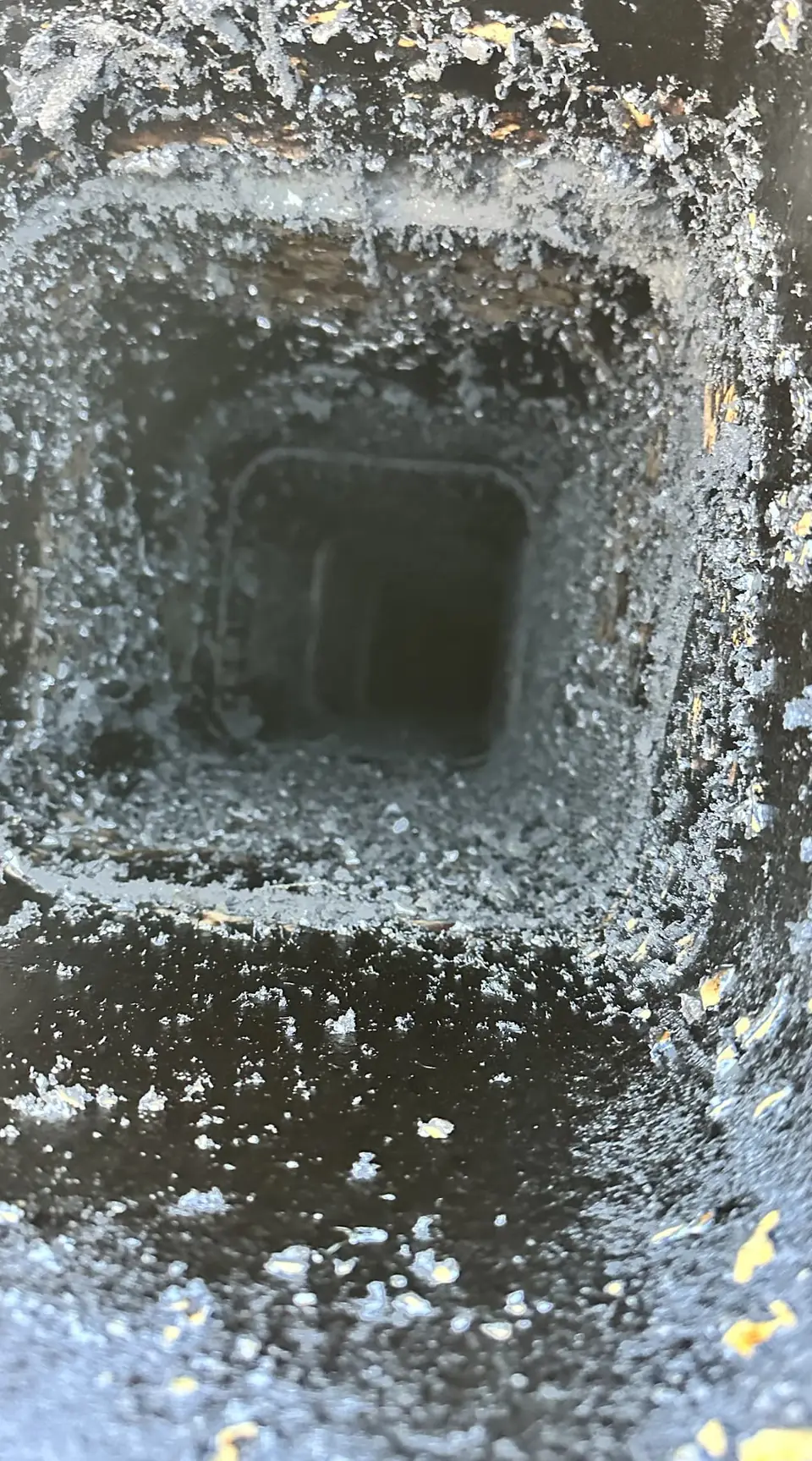
- Dark, crusty or shiny material inside the flue — This can be creosote rather than loose soot. Thick or hardened deposits need a sweep’s assessment because the removal approach depends on the buildup.
- Smoke spilling into the room — Smoke that comes back through the fireplace can signal a draft issue, blockage or other venting problem. Stop using the fireplace until the cause has been checked.
- Loose brick, crumbling mortar or cracked parts — Visible masonry damage is not fixed by sweeping. Arrange an inspection to determine whether the affected area needs repair.
- Water marks or dampness near the chimney — Moisture can damage masonry and other chimney components over time. Ask for the leak source to be assessed instead of treating a water mark as a cleaning issue.
Need help now? (240) 734-3313
What to Do After the Sweep Finds a Problem
Ask the sweep to identify the affected component and explain whether the finding is buildup, a blockage or damage. A clear description helps you understand why cleaning is enough—or why a closer inspection or repair should come next.
For a significant chimney or appliance change, a chimney fire or a major weather event, ask whether a Level 2 inspection is appropriate. If the fireplace has been smoking into the room or you notice a sudden change in how it vents, leave it unused until the cause is checked.
Keep any service notes with your home records, especially if they identify a damaged liner, masonry or damper. Compare the finding with the recommended next service, and use our prices to review starting prices for listed services.
How to Book a Chimney Sweep Visit in Gaithersburg
To book, call MD Chimney Sweep at (240) 734-3313 or use the contact page. Share the fireplace type, whether the chimney has been used recently, and any smoke or visible damage; those details help prepare for the right service.
MD Chimney Sweep serves Maryland from its Gaithersburg base, and same-day service is available. Darren Whitaker, the owner, brings 22 years of experience with chimneys and fireplaces. Chimney work comes with a warranty starting from 2 years.
Frequently asked questions
What does a chimney sweep include?
A typical chimney sweep checks the firebox, damper and accessible flue, then brushes soot and creosote from the flue and collects the loosened debris. If the sweep finds damage or an obstruction, that may need a separate inspection or repair.
How long does a chimney sweep take?
Visit length depends on the chimney’s height, access, buildup and whether the sweep finds a reason for additional evaluation. Ask about the expected appointment length when you book, since a straightforward cleaning and a visit involving further inspection are different scopes of work.
Do chimney sweeps make a mess?
A professional sweep typically protects the floor around the fireplace and uses containment and vacuum equipment to collect soot and debris. Clearing the hearth and moving fragile items away from the work area helps protect your belongings.
Should I book an inspection as well as a sweep?
A sweep removes deposits, while an inspection assesses the chimney’s condition, so one does not automatically replace the other. Ask about an inspection if you have visible damage, a venting problem, a significant change to the system or a chimney fire in its history.
Book a Chimney Sweep
Call (240) 734-3313 or contact MD Chimney Sweep to schedule service.